
Great Japan Youth League
The Great Japan Youth Party 大日本青年黨 (later known as the Great Japan Honest Party 大日本赤誠黨) was founded by the ultranationalist activist Colonel Shingoro (also rendered as Kingoro) Hashimoto 橋本欣五郎. The league existed from October 17th, 1937, until its forced dissolution on June 13th, 1945, by U.S. occupation authorities. Colonel Hashimoto served as the president of the Youth League.
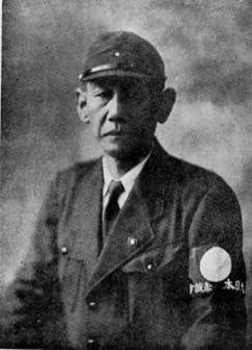
橋本欣五郎 (1890-1957)
Notice the arm band
Colonel Hashimoto imitated the Hitler Youth League in Nazi Germany and even used similarly colored light-brown uniforms. The organization flag was a white circle centered on a red background (see his armband in the picture below). There were 600 members in attendance at its first rally, which was held in front of the Meiji Shrine 明治神宮 (Meiji Jingū) in Shibuya, Tokyo. The stated goal of the organization was to teach teenagers basic survival skills, first aid, life skills, cultural lessons, and traditional and basic weapons training. But Hashimoto’s main purpose was to create an idealistic young cadre who supported the emperor and promoted the doctrine of nationalism and militarism. He made several statements similar to those of Baldur von Schirach and Arthur Axmann, leaders in the Hitler Youth political organization in Germany. Due to increased conscription during the Second Sino-Japanese War and the subsequent war in the Pacific, most of his target age group were in the military. The Japanese Youth Party fell far short of its goals, especially after the establishment of the Imperial Rule Assistance Association 大政翼贊會 in 1940. In June 1942, all youth organizations were merged into the Greater Japan Imperial Rule Assistance Youth Corps 賛青年団, which was modeled on the German Sturmabteilung (Stormtroopers).
On October 6, 1938, members of the Hitler Youth arrived in Japan. Among the many activities that ensued, the Hitler Youth visited the Meiji Shrine and the Yasukuni Shrine. They also climbed Mount Fuji with members of the Japanese Youth League.
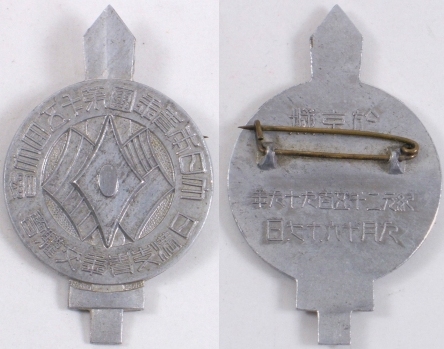
The badge, pictured here, is a Japanese-Manchukuo-Korea combined youth league badge that was made for a meeting that took place in Keijō (Seoul), Korea, on September 16 & 17, 1939.
The obverse top inscription is 大日本青年團第十五囬大會, 15th Congress of the Great Japan Youth League, while the lower inscription is 日満支青年交驩會, Japanese, Korea, Manchukuo Youth Exchange of Courtesies (Fraternization) Gathering. The reverse inscription is in three lines. At the top is 於京城, “at Keijō,” which is the Japanese name for Seoul. The next two lines go together: 紀元二千五百九十九年 (Kigen 2599) and 九月十六.十七.日, which provides the date as Sept. 16 & 17, 1939.
I need to thank Nick at Medals of Asia for his help in the translation of this badge. Stylized Chinese characters are very difficult for me to work with. You can find his copy of this badge on his website at “15th Congress of the Great Japan Youth League Congress”.
Colonel Shingoro Hashimoto was convicted as a Class A war criminal and was sentenced to life in prison for his involvement in the Mukden Incident and for the Rape and Massacre of Nanking. He was also involved in the Panay incident of December 12, 1937, in which he ordered unprovoked Japanese planes to attack and sink the USS Panay (PR-5) on the Yangtze River in China. At the time, the United States was not a belligerent in a war with Japan. He was paroled in 1954, ran for but lost a political party nomination in 1956, married for the third time, and eventually died of lung cancer in 1957.
Korea Nitrogen Society
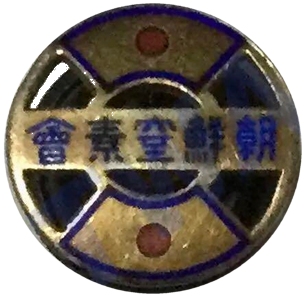
朝鮮窒素会 会員章
The text is 朝鮮窒責會 Chosŏn Nitrogen Society
This particular piece was sold on EBAY.
Starting in the 1920s, during Japanese colonial rule, the city of Hungnam 흥남 in South Hamgyong Province 함경남도 咸镜南道 (present day North Korea) became a heavy industrial complex for the production of fertilizers.
In Jan. 1926, the Chosŏn Hydroelectric Co., Ltd. 朝鮮水電(株) began construction of a generating plant on the Yeongseong River 영산강. Power generation started in Nov. 1929. The Nippon Nitrogen Fertilizer Company 日本窒素肥料(株) was founded in 1908 by Shitagau Noguchi 野口 遵 (1873-1944).1 The company was planning to capitalize on the output of the new power plant. Over time, Noguchi built nitrogen fertilizer, hardened oil (hydrogenated oil), gunpowder, carbide, caustic soda, and soda ash factories, as well as steel and zinc industrial complexes.2 In May 1927, the company created the Chosŏn Nitrogen Fertilizer Co., Ltd. 朝鮮窒素肥料(株) with a groundbreaking ceremony being held in June. In Jan. 1930, the manufacture of fertilizers such as ammonium sulfate began, and the plant was merged with the Chosŏn Hydroelectric Company 朝鮮水電(株). In May 1933, the Chosŏn Water Electric Co., Ltd. 長津江水電(株) was established. They built hydroelectric plants on the Changjin River and then on the Chuchuan River. With the outbreak of the Sino-Japanese War, Chosŏn was put in a state of war, and the nitrogen fertilizer factories in Hungnam, which used ammonia to make nitrogen fertilizer, changed their product line and began to produce nitrogen-based explosives such as dynamite. In 1941, the Chosŏn Water Electric Co., Ltd. merged with Nippon Nitrogen Fertilizer Co., Ltd. and continued their operations until the end of World War II. In 1945, the Chosŏn Nitrogen Fertilizer Co., Ltd. 朝鮮窒素肥料(株) purportedly owned the world’s largest chemical complex, the Hungnam Plant 흥남공장 (興南工場). The Chosŏn Nitrogen Fertilizer Co., Ltd. and all of Shitagau Noguchi’s companies were dissolved and ceased to exist after World War II.
With the defeat of Japan, the area fell under the administrative control of North Korea. During the Korean War, Hungnam was heavily fought over, and due to United Nations air strikes, much of the industrial complex was destroyed. It was later rebuilt by the Soviet Union and some Eastern European countries. Today, the complex is believed to be heavily dedicated to producing military goods, potentially including solid-propellant rocket engines and explosives. Although North Korea suffers significant problems in food production, the manufacture of fertilizer does not seem to be a priority.
Chosŏn Machine Works
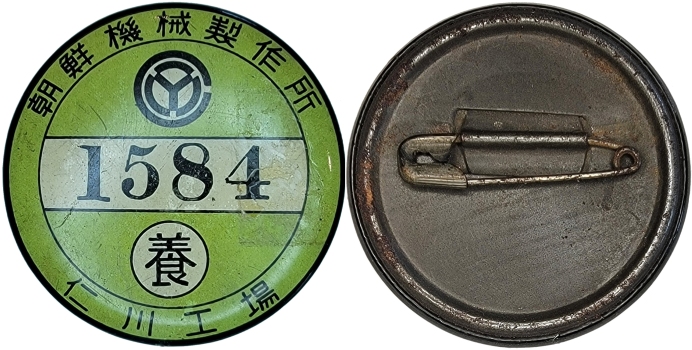
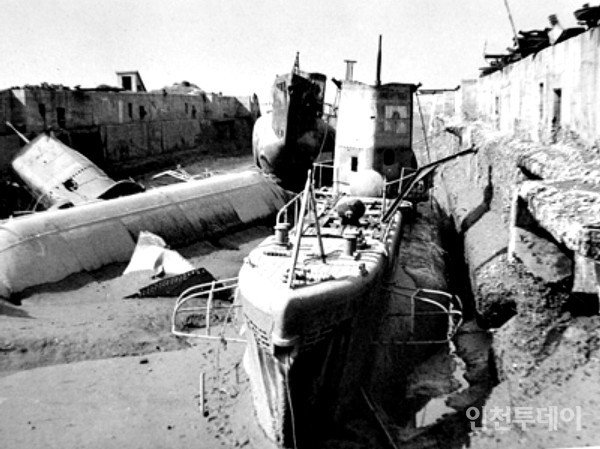
The Chosŏn Machine Works was Korea’s first large-scale machine factory. The Inchon factory was established in June 1937, and the head office was located in Gyeongseong. The parent company was Yokoyama Kogyosho (橫山工業所), a comprehensive machinery company in Japan. At the time, the Japanese were developing a mining system to exploit the mineral wealth of Korea. The factory was built to produce mining equipment. It was the first large-scale machine factory built in Chosŏn, and it marked the beginning of the modern machining industry in Korea.
Chosŏn Machine Works started with a capital of 500,000 won when it was founded, but increased to 3 million yen that same year due to the favorable sales of mining equipment. It doubled again two years later. It is said that it made profits right after its establishment and has paid a dividend of 6% from the second year onwards. In 1939, it was converted into a munitions factory by the Japanese Empire, and the factory land was expanded, and 130 Korean houses were purchased and demolished for the expansion. An article in the Dong-A Ilbo, published on August 25, 1939, appealed for damages due to the demolition order. Beginning in August 1942, the Japanese Navy lost numerous warships and transport ships in the Battle of Guadalcanal in the Solomon Islands. The continual push by the American forces made it difficult to transport supplies for the army. Accordingly, in 1942, the Japanese army made plans to build a transport submarine called ‘Maruyu’ independently of the Navy. Later, along with Japanese companies Hitachi (24 ships), Nippon Steel (9 ships), and Ando Iron Works (2 ships), submarines were also ordered from the Chosŏn Machine Works. It is rumored that the current owner of the production facility, Daewoo Heavy Industries, has the original blueprints for the submarine. These drawings have not been made public. The Chosŏn Machine Works supposedly built 14 200-ton class submarines. Of which only three submarines were actually delivered, and they were named ‘유3001호’, ‘유3002호’, and ‘유3003호’ (‘Yu 3001’, ‘Yu 3002’, and ‘Yu 3003’). From 1944 (昭和 19 years) to 1945 (昭和 20 years), students from Inchon Middle School were mobilized into the labor patriotic corps 근로보국대로 and required to work at the factory. Chosŏn Machine Works obtained information that the Japanese Army was planning to build close to 100 Maruyu, so they hired 1300 new employees, increasing the number of employees to about 3000, but the expansion plan was canceled due to Japan’s surrender on Aug. 15, 1945. At the time, six Maruyu submarines were under construction and were lined up in the dry dock. Two of them, which were in the final stages of completion, are believed to have been blown up by US forces near Inchon, and four were left in dry dock until the outbreak of the Korean War.
With the liberation of Korea, the Chosŏn Machine Works was placed under the direct control of the Ministry of Commerce and Industry in 1946, then transferred to the Ministry of National Defense in 1949 and managed by the Navy. It was subsequently transferred back to the Ministry of Commerce and Industry in 1951 and was made a state-owned enterprise in 1952, jointly managed by the Ministry of Commerce and the Ministry of Defense. It was then transferred back to the Ministry of National Defense in 1955. Not only that, but it went through several more twists and turns, including being transferred back to the Ministry of Commerce and Industry in 1961. Later, on May 20, 1963, it was re-established as a state-owned enterprise, changing its name to ‘Korea Machinery Industry Co., Ltd.’. However, due to continued inefficiency and poor management, Shinjin Motor Co., Ltd. took over and privatized it in September 1968, under the name ‘Korea Machinery Industry Co., Ltd.’.
‘Korea Machinery Industry Co., Ltd.’ has grown into the largest comprehensive machinery factory in Korea. It is currently called the “Daewoo Heavy Industries”.
Information Source: Inchon Today
Chosŏn Yusen Company 조선우선회사 (朝鮮郵船會社)
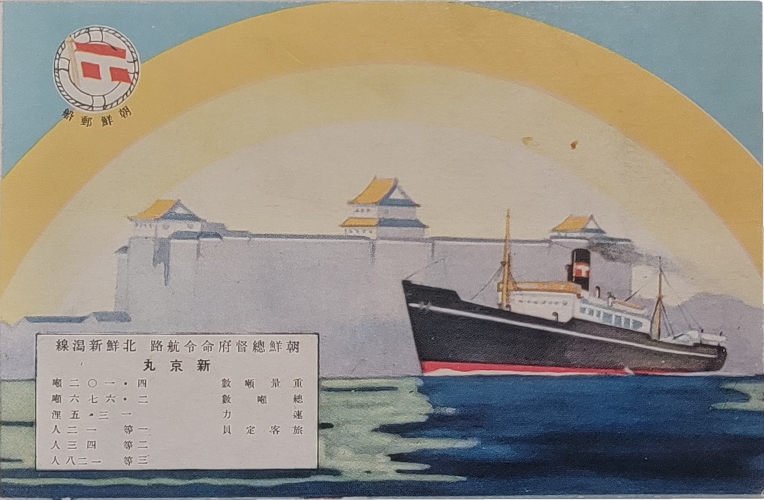
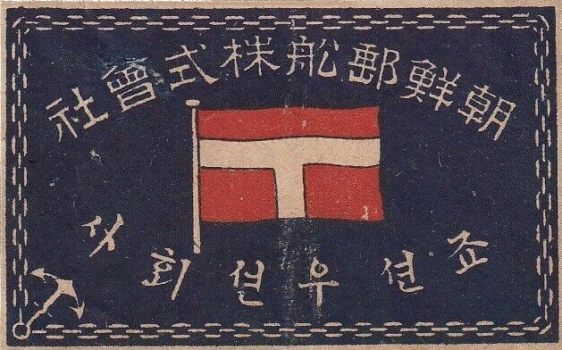
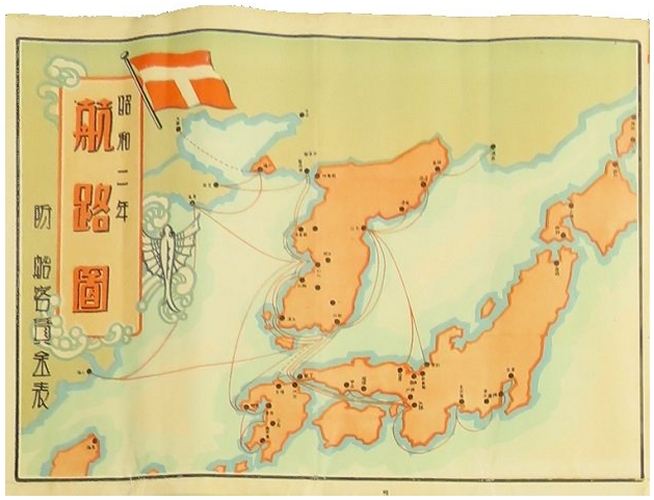
With the signing of the Japan-Korea Treaty of Amity in 1876, the expansion of Japanese shipping into the Korean Peninsula became more active. In 1885, Nippon Yusen was established, and its routes were under the direction of the Japanese government. They included routes between Kobe, Shimonoseki, Nagasaki, Pusan, Wonsan, and Uracho. There was a small Korean steamship company called Riunsa 利運社 (리운사), which was established in 1893 and had three ships under the control of the Korean government. The ships were the Hyunhap 顯盒 (현합), the Haeryong 海龍 (해룡), and the Changryong 蒼龍 (창룡), all of which operated on coastal routes. Before the Sino-Japanese War, there was fierce competition with Chinese shipping companies. But after the war, Japanese companies became the dominant force on the peninsula. On January 28, 1895, during the Sino-Japanese War, Nippon Yusen concluded a contract with the Korean government and Riunsha to manage the three steamships on behalf of the Korean government and provide government protection. After the Japanese annexation of Korea in 1910, the Governor-General of Korea integrated the NYK Line (日本郵船会社) and the Osaka Merchant Shipping Company (大阪商船会社) and established the Chosŏn Yusen Co., Ltd. 朝鮮郵船株式会社 as the major shipping company in Korea. Chosŏn Yusen Co., Ltd. was formally founded on January 19, 1912. The head office was in Gyeongseong, Gyeonggi-do, Korea, and a branch office was in Pusan. The capital was 3 million yen. The Japanese Government-General of Korea was also deeply involved in all aspects of Chosŏn yusen. The majority of the shareholders in the company were Japanese. The company, being a joint-stock company, had to please not only the Government General of Korea but also show profits for its shareholders. It also worked hand in hand with the development of the railroads in Korea. It wasn’t until 1930 that Shin Sun-seong 신순성 became the first Korean to captain a ship operated by Chosŏn Yusen.
Chosŏn Yusen dominated shipping on the Korean Peninsula during the Japanese colonial period with its system of designated routes. It transported war materials during World War II and lost 26 ships due to war damage, and 3 more were lost due to normal marine accidents. At the time of Korea’s liberation from Japan, its main office was located in the Chosŏn First Building in front of Namdaemun 남대문 (南大門). After liberation, it was taken over by the US Military Government and operated by Kim Yong-ju 김용주. The Japanese tried to get the remaining ships returned to Japan, but Korea simply did not acknowledge the Japanese request. The Japanese did recover some ships and other assets of the former Chosŏn Yusen and used them to establish the Tokyo Yusen Co., Ltd., on March 31, 1951, with a capital of 20 million yen. In February 1948, the cargo ship Aengdo 앵도 (Cherry) was the first ship to hoist the South Korean flag after liberation.
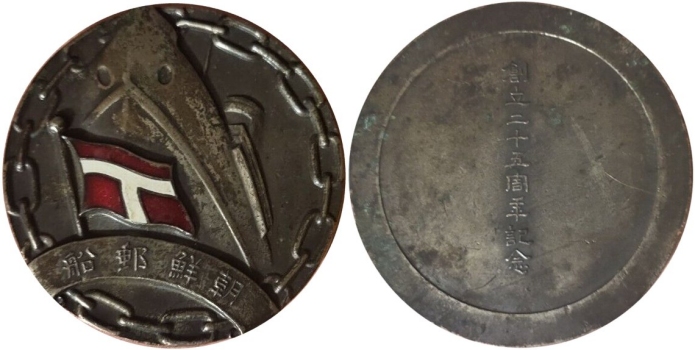
Reverse: 創立二十五周年記念 (창립이십오주년기념) 25th anniversary of founding
They were produced by Miyamoto Trading Co., Ltd. 宮本商行
For more information on The Miyamoto Trading Co. Ltd. see
https://asiamedals.info/threads/history-marks-and-badges-of-miyamoto-shoko.19512/
In 1937, along with the medal, the company published a book on its 25-year history. It has since been translated into Korean and republished on April 15, 2023.
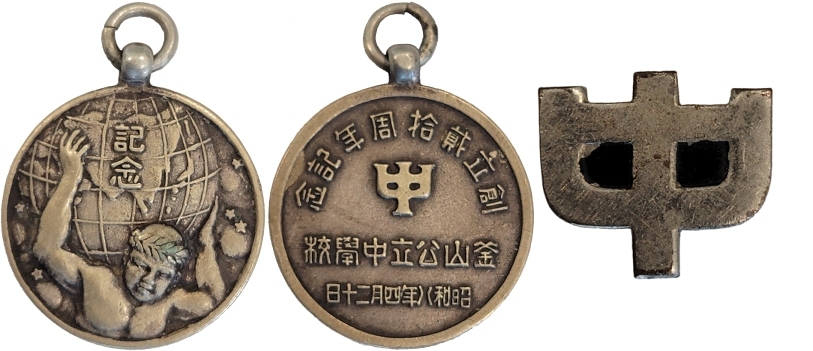
Pusan Middle School 釜山中學
On March 28, 1913, the Chosŏn Governor-General’s administration decided to establish a middle school in Pusan. On April 1, 1913, the Chosŏn Governor-General’s Notice No. 93 was enacted, and the Pusan Public Shimsang School opened in Jung-gu, Pusan. On Nov. 28, 1913, it was moved to Choryang-dong, Dong-gu and held its first graduation ceremony on March 10, 1918. Originally, it was both a middle school and a high school, each located in separate buildings next to each other. The school was only for the education of Japanese male children and was closed by the U.S. Military Government in 1945 after the defeat of Japan in WWII. Because it was only for the education of Japanese children, the current Pusan Middle School does not recognize the original school as its predecessor.
This school should not be confused with the Pusan Public Commercial School 부산공립상업학교. On March 1, 1896, the Gaeseong School 開成學校 (개성학교) opened in Pusan, and on April 1, 1912, this school became the Pusan Public Commercial School.3 Both schools allowed Korean students. The earlier Gaeseong School has a singular claim to fame. In August 1900, Principal Aranami 아라나미 led three students on an eight-day round trip to Nagasaki via Shimonoseki, Japan. This can be considered the forerunner of overseas school trips in Korea. However, the trip was intended to showcase Japan’s advanced civilization and to foster Korean admiration for Japan and the superiority of Japanese culture. On Sept. 1, 1951, the school separated into the Pusan Gaeseong Middle School and the Pusan Commercial High School. A Gaeseong High School History Museum exists on the school property. Former Korean President Roh Moo-hyun 노무현 is an alumnus.


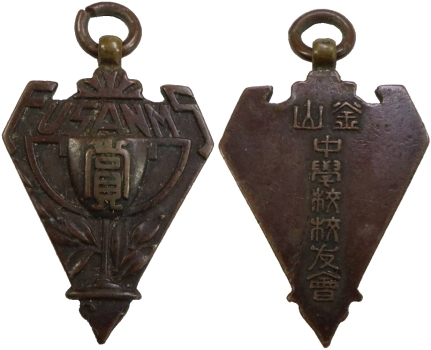
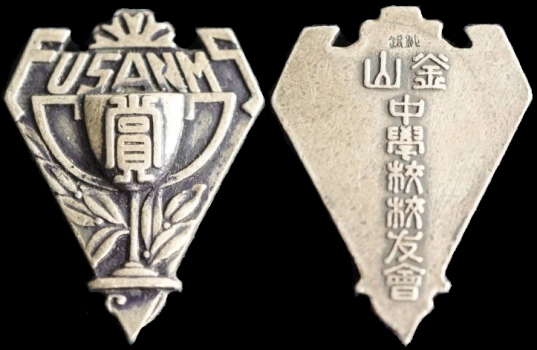
Also hallmarked as silver.
For the four medals above, on the obverse, Pusan is transliterated as Fusan which was common during the Japanese colonial period. The MS is for middle school. The Chinese character on top of the trophy is 賞 (상), meaning “prize,” “reward,” or “praise.” The text on the reverse reads as Pusan 釜山 Middle School Alumni Association 中學校校友會. Today, Pusan is commonly transliterated as Busan.
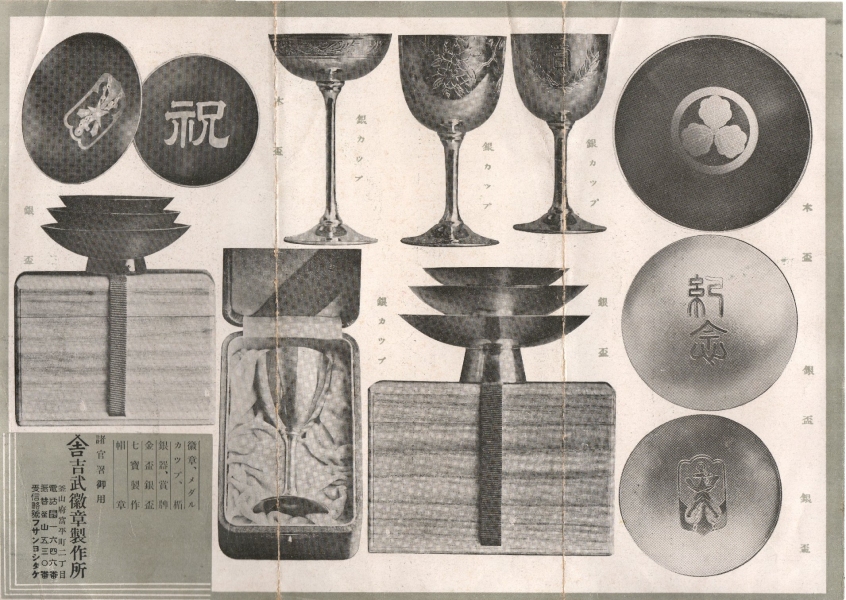
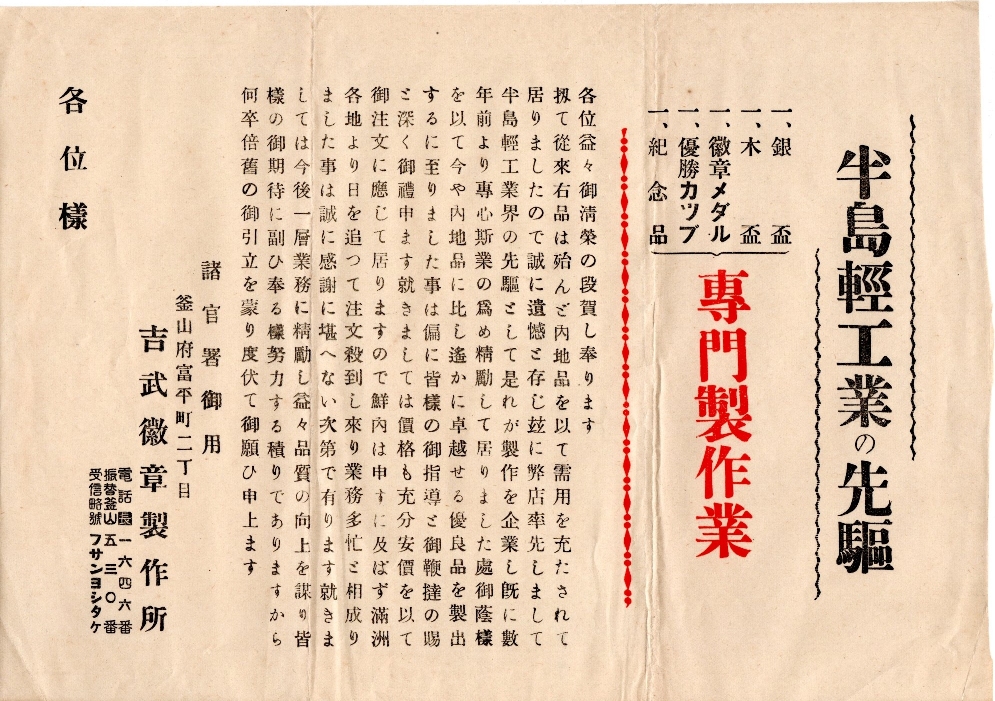
Yoshitaka Medal Company, Fusan
The Yoshitaka Medal Company 吉武徽章製作所 (길무휘장제작소) was located in Fusan (Pusan), Korea. None of these documents are dated, but Nick at Medals of Asia believes they are from the late 1930s. I have been unable to find any history on this company. There is a company with a similar name, 吉武製作所, in Adachi-ku, Tokyo, but it was established in Jan. 1957 ( 設立 昭和32年1月).
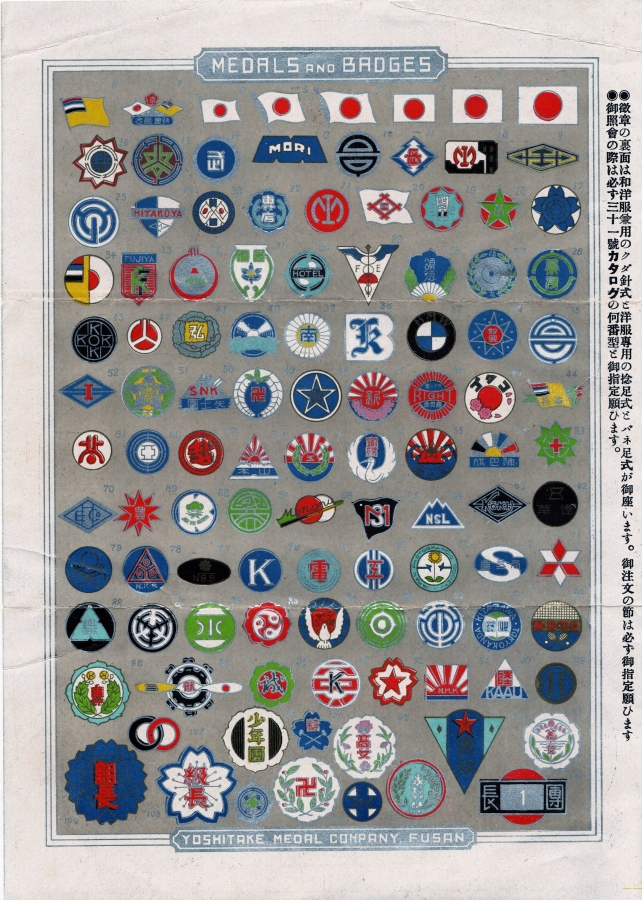

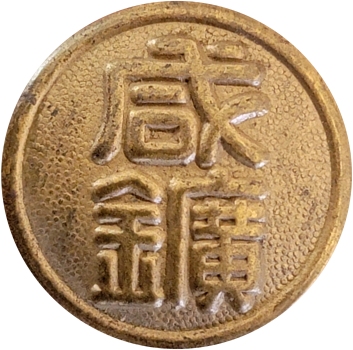
South Hamgyong Mining Co., Ltd. Clothes Button 咸鏡南道砿業株式会社 衣服按鈕
Hamgyong Coal Mine 咸鏡炭坑 produced 8,000 tons of high-quality lignite per month.4 In 1924, when it began distribution in the Seoul market, its high quality gained a notable reputation. It was so successful that Fushun Coal and Inland Coal were driven out of the marketplace. It was called “Hamhung coal,” and because it had a low sulfur content, it was sold not only for domestic use but also to large-scale users such as the Government-General of Korea Railway Bureau, Korea Railway (Chosen), Korea Post, Korea Hydroelectric Power Co., Korea Nitrogen Co., and the Japanese army’s 74th Infantry Regiment. The button’s obverse carries the inscription 咸鑛 (함광). The 1st character, 咸 (함 Ham), refers to Hamgyong Province in present-day North Korea. The 2nd character, 鑛 (광 Kwang), translates as “mine.”These buttons are found in 15.5 mm and 20.5 mm sizes.
The buttons were recently sold and were described as being from the South Hamgyong Mining Co., Ltd., but there is another possibility. The Haman Mine 咸安鑛山 (함안광산) was a copper and silver mine located in Yeoyang-ri, Jinjeon-myeon, Masanhappo-gu, Changwon-si, Gyeongsangnam-do. 경상남도 창원시 마산합포구 진전면 여양리, present-day South Korea. This mine has a long history and was once a large-scale operation. Developed by the Japanese in 1919, its production reached 4,445 tons in 1938 but dropped to 7 tons in 1959. Currently the mine is abandoned, and the mine shaft is flooded.
Footnotes:
- He was often called the ‘father of the electrical and chemical industries in Japan’ and the ‘business king of Chosŏn.’
- After WWII, it was also revealed that secret research was being conducted in Hamyong Province to develop an atomic bomb.
- The name of the school, Gaeseong (開成), has nothing to do with the city of Gaeseong and is a phrase from the Confucian classic, the Book of Changes, 開物成務 (개물성무), which means “to create things and accomplish things.”
- Lignite, also known as brown coal, is a soft, brownish-black coal that is the lowest rank of coal. It’s formed from naturally compressed peat and is used primarily as a fuel for power generation and industrial processes. While abundant, lignite has low-energy content and high moisture and ash content, making it less efficient and more polluting than higher-rank coals.