
From “The History of Taegeuk Flags” an original article by Nozomi Kariyasu
Located at https://fiav.org/wp-content/uploads/2021/06/ICV23-17-Kariyasu-TheHistoryofTaegeukFlags.pdf
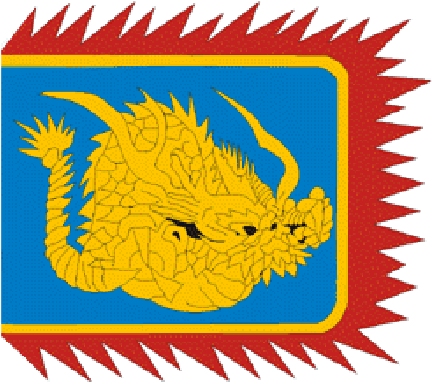
Toward the end of the 19th century, the Taeguk flag, composed of blue and red whirls forming the yin-yang sign, was adopted as a national flag by the Korean Kingdom (1392-1897). Before then (according to a Japanese reference work) the Korean Kingdom used a red-bordered yellow flag charged with a black oriental dragon with clouds (1856) and a red-bordered blue flag charged with a yellow oriental dragon (1876). (These flags were heavily influenced by the Chinese flag as they had an oriental dragon and border, and they seem to have represented the king rather than the nation.) Even earlier, a Korean diplomatic mission called Korea Tsusinshi, which visited Japan 12 times during 1607-1811, used Chinese-type flags charged with Chinese letters and fringe.

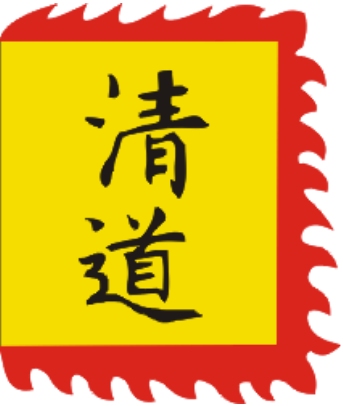

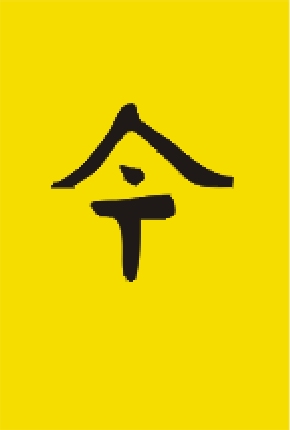
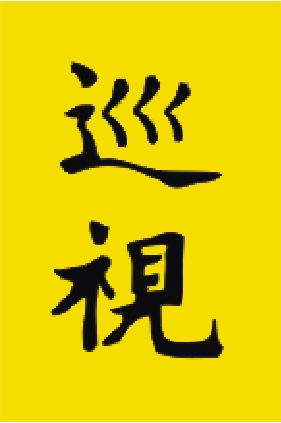
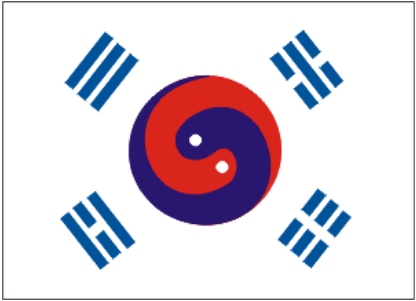
The prototype of the Taeguk flag, which has a blue and red Taeguk with white eyes and blue kwae (trigrams), appeared as a national flag of Koryo in the book named Trade Agreement, which contains treaties and official letters between the Ching (Chinese) government and foreign diplomats, published in 1874 in China and discovered in the Korean Naval Officers Academy Library in 1991. “Koryo” was the dynasty that ruled Korea from 918 to 1392 and the source of the country’s name, “Korea.”
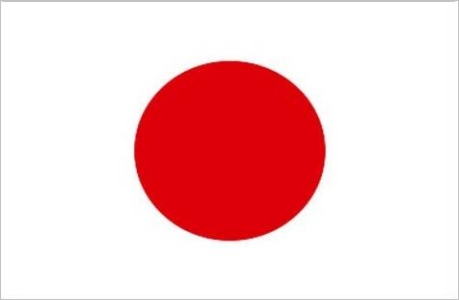
In 1875 Japan dispatched a fleet, the “Unkei-maru,” to Korean-adjacent seas which led a Korean garrison to fire against the Japanese fleet near Ganghwa. Japan protested that the Korean garrison devised the preemptive attack against the Unkei-maru, which hoisted a Japanese Hinomaru national flag. This conflict resulted in the 1876 Treaty of Ganghwa, under which Korea accepted harbor operations and the opening of ports.
After China had learned of the incident, it requested that Korea use the Chinese dragon flag in Korea. Korea then set up a national flag adoption committee to discuss adoption of the dragon flag, but it could not reach a conclusion. (Incidentally, the dragon had 5 claws in the Chinese flag, but the dragon in subject nations’ flags had fewer, namely 4 claws on the Korean flag and 3 claws on the Ryukyu flag.)
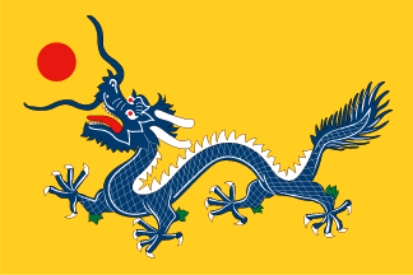
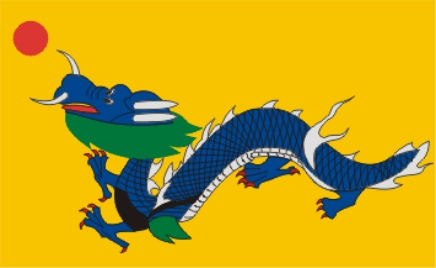
by China
This seems to have been the first time that Korea realized it needed a national flag. The Korean Kingdom had abolished its national isolation policy and negotiated commercial treaties with Japan, Britain, Russia, Germany, France, and others, and therefore felt it necessary to have an official national flag representing Korea.
In September 1882, Korea dispatched a mission to Japan led by Park Yong Hyo. Aboard the Japanese steamship Meiji-maru, Park discussed a possible Korean national flag featuring the Taeguk and eight kwaes with British consular staff, W. G. Atson and Captain James. They created a Taeguk flag with four kwaes and hoisted the flag as a Korean national flag in the lodging in Kobe. The flag was also hoisted along with other national flags in Congratulatory Hall in Tokyo on October 2, 1882.
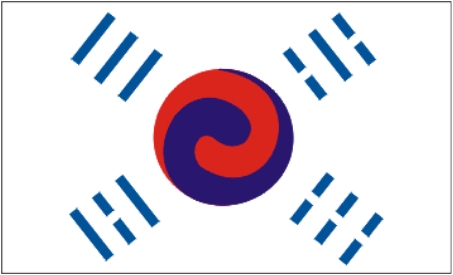
The image of the Taeguk flag hoisted in Japan appeared in the Japanese daily newspaper JijiShinpo Number 179, dated October 2, 1882. According to the article, Park had received, in advance, the direct instruction from Korea’s King Kojong that the Korean national flag should have four kwaes indicating north, south, east, and west in the four corners. Unlike the current national flag, the flag had a larger blue and red Taeguk and black kwaes in different shapes.
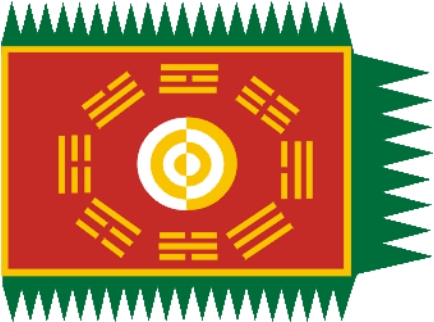
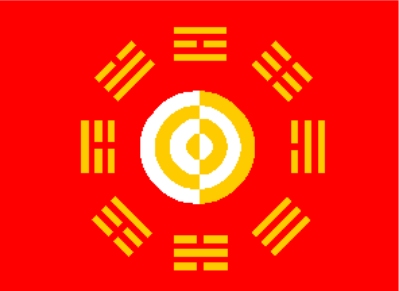
Incidentally, a green-bordered reddish-brown flag charged with a circular yin-yang design in the center, considered to be King Kojong’s personal flag from 1882, has been found. That flag has eight kwaes.
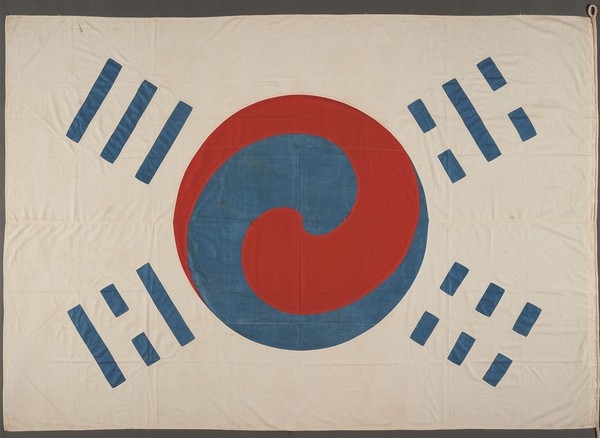
Although the king promulgated his decision to use the Taeguk flag as the Korean National flag, on March 6, 1883, of the next year, when the Park party returned, various types of Taeguk flags were made due to the lack of design specifications for the flag. The oldest existing Taeguk flag can be seen in the Smithsonian Institution’s National Museum of American History in Washington, D.C., U.S.A. The flag is 36 cm x 53 cm, and the four kwaes are black. This flag was made in 1884. The color of the yin-yang design is the reverse of the present national flag.

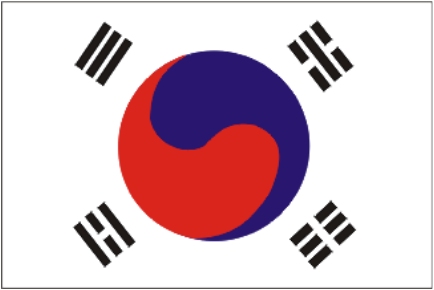
The oldest existing Taeguk flag ‘in Korea’ is the flag granted by King Kojong to Mr. O. M. Denny, an American diplomatic adviser, in 1890. The flag differs from the current national flag in kwae color (blue) and shape of the yin-yang design.
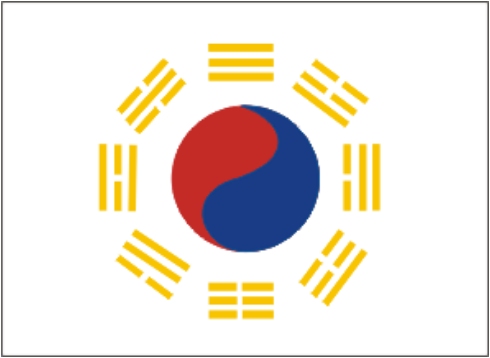
The Korean Kingdom’s national flag hoisted in the Korean Consulate in Hamburg, Germany, in 1893 had a blue/red yin-yang design in the center and eight gold kwaes around the yin-yang.
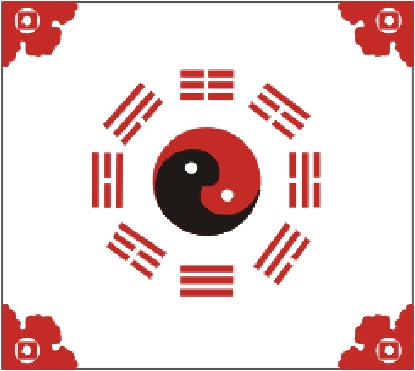
A Korean war flag used in the Sino-Japanese War, depicted in a Japanese colored woodblock print in 1895, had a yin-yang design with two white eyes in the center, eight red kwaes arranged around the center, and red decorations at the four corners.
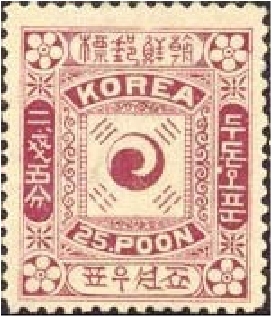
The Taeguk flag appeared on a Korean Kingdom stamp for the first time on July 22, 1895. It differed from the present national flag in the shape of the black kwaes and the yin-yang design, as well as its nearly square form.
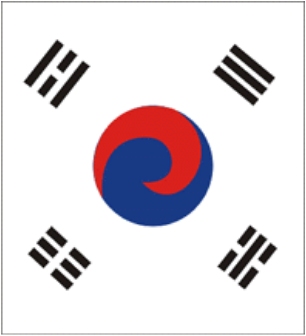
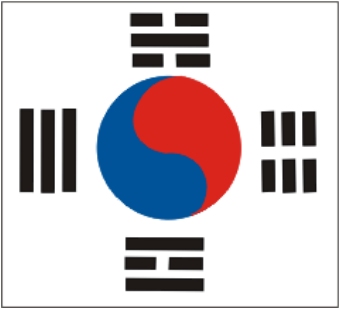
In 1897 the Korean Kingdom became the Korean Empire. The national flag hoisted in the Imperial Korean Pavilion at the Paris World Exposition in 1900 was nearly square, and the four black kwaes were arranged in the form of a cross rather than diagonally.
On December 8, 1900, the “Taeguk Flag Regulation” was promulgated. According to this regulation, the length of the flag was 2 Japanese feet (60 cm.), the width was 1.8 Japanese feet (54 cm.), and the size of the blue/red Taeguk was 7 sun (21 cm.). The flag was nearly square.
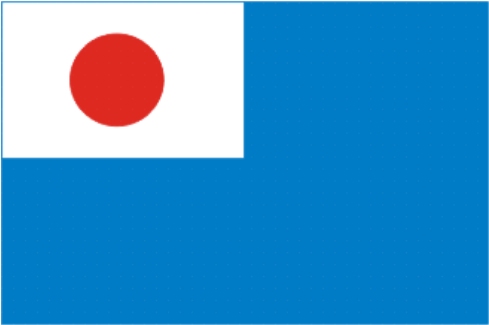
In 1906 the Japanese Resident General Office was set up in Korea, and a light blue Resident General’s flag charged with the Hinomaru in the canton was adopted on February 14, 1906. The light blue color symbolized justice, fairness, and philanthropy.
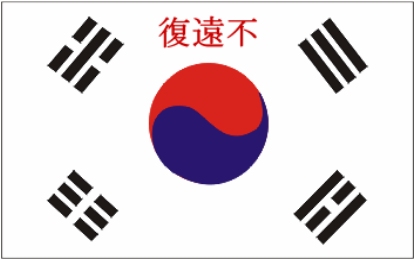
In 1906, during its fight against Japanese troops, the Army for Justice in Chollanam-do, led by Kho Kwang Soon, used a Taeguk flag with an inscription reading, “We will recover national sovereignty soon.” This design was later adopted as a war flag by the Recovery Army, which was set up to defeat Japanese troops and restore homeland sovereignty.
After the Japanese annexation of Korea, the Resident General’s flag was abolished on August 22, 1910, with the establishment of the Korean Governor General’s Office. After that, the Japanese Hinomaru (national flag) was used in Korea.
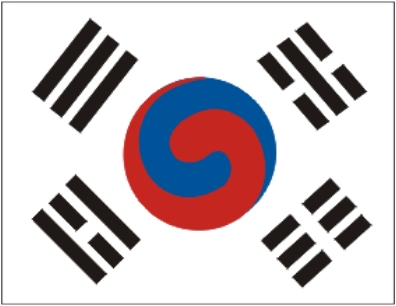
While the country was under Japanese rule from 1910 to 1945, the Taeguk flag was used as a symbol of the Korean independence movement, both inside and outside of Korea. That Taeguk flag was the one with the blue/red yin-yang and four black kwaes that was used in 1910.
The Recovery Army government was established in Vladivostok in 1914. On March 1, 1919, two million people participated in the Independent Banzai Movement, and the Taeguk flag charged with four black kwaes was hoisted in Pyongyang.
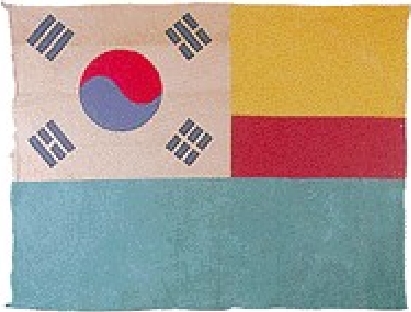
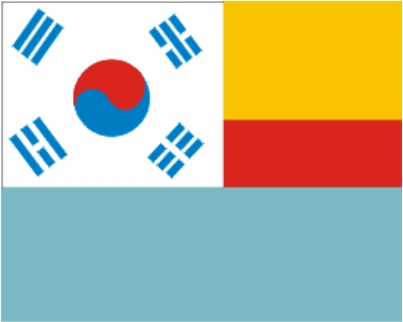
The Independent Army, launched in Manchuria in the 1920s, used a war flag of three horizontal stripes of yellow, red, and light blue charged with a Taeguk flag in the canton. It was unusual that a striped flag represented Korea.
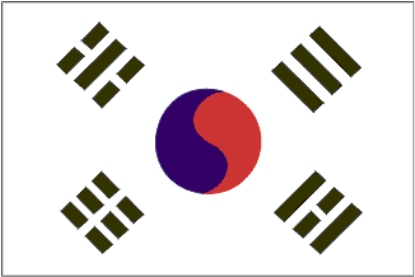
In 1941, independence advocate Kim Koo used a Taeguk flag that differed from the current national flag’s arrangement of the four black kwaes and the blue/red yin-yang design.
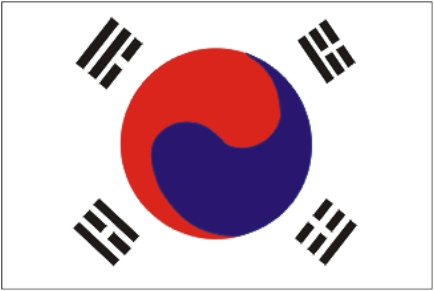
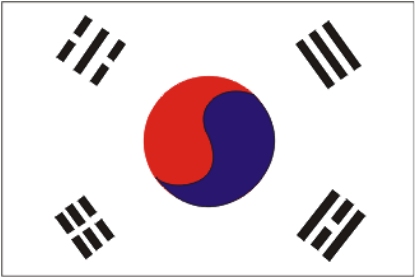
On August 15, 1945, Japan surrendered to the Allies, and the South Korean Provisional Government was established with the support of U.S. forces. The flag used by the Provisional Government was basically the same as the present national flag except for the positions of two kwaes.
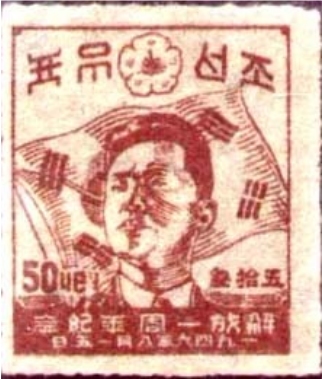
On a North Korean stamp issued on August 15, 1946, commemorating the first anniversary of liberation, the Taeguk flag, charged with four black kwaes and the blue and red yin-yang design, was drawn in the background behind Kim Il Sung’s face. This proves that the Taeguk flag was used in North Korea as well, before the current national flag of the Democratic People’s Republic of Korea was adopted on September 8, 1948.
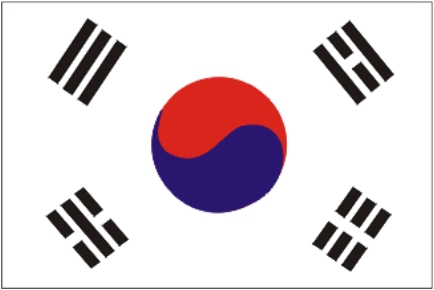
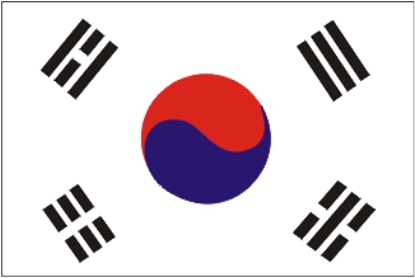
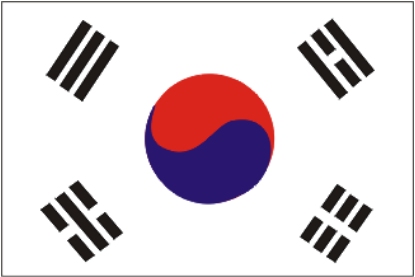
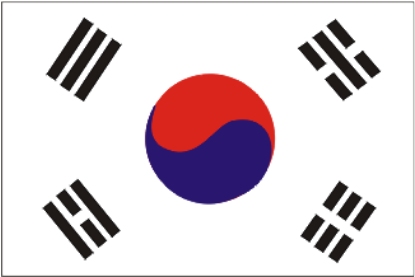
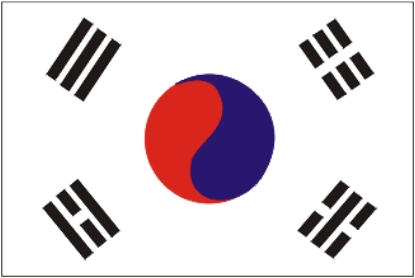

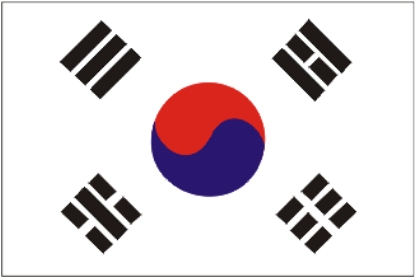
After the government of the Republic of Korea was established on August 15, 1948, it pursued standardization of the Taeguk flag. In January 1949, a National Flag Correction Committee of 42 members was set up, and the design of the Taeguk flag was examined. The first proposal was made by a Royalist Group suggesting the Taeguk flag of 1906. A second proposal, made by the Ministry of Education, was for the Taeguk flag of the 1945 provisional government. The National Flag Promotion Association presented a third proposal for the Taeguk flag, which was eventually adopted as the present national flag. In addition, a fourth proposal was made by an individual person for a flag charged with red on the left and blue on the right of the Taeguk design. Finally, a fifth proposal was made by the Independent Army for a Taeguk flag in nearly square form. After deliberation, the third flag proposal was adopted as the Korean national flag and announced in Cabinet Notification No. 8, dated January 25, 1950.

Footnotes:
- The flag of Japan is a white flag with a large red disc at its centre (representing the sun, more specifically the Shinto sun goddess Amaterasu). It is the civil flag, merchant flag and state flag of Japan. It is known as the Hinomaru (hi no maru no hata, “sun disk flag”), or more officially Nisshōki (Japanese standard).